Maundy Thursday worship in a time of pandemic.
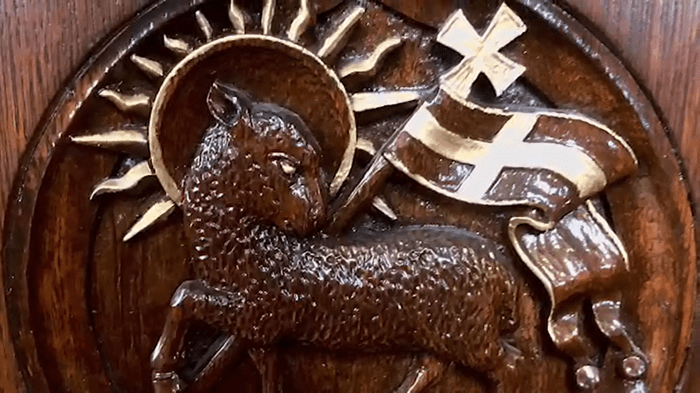
More than the bright floral glory of Easter Sunday, dominated by dresses and children and dinners, this is the night that makes it Easter for me. Maundy Thursday: The humility of Christ. The sacrifice and love. The commandment to do the same. And the ceremonial stripping of the altar.
Having spent many years working for churches, and a lifetime attending services, I’m well accustomed to the pomp and pageantry of Christian worship, the traditions that have been repeated so long that few people even remember why. I’ve witnessed parish controversies over what objects belong on or near the altar, which version of a hymn or creed or prayer is proper, how communion should be served. I’m like anyone else, I don’t like change. Traditions become comfortable and meaningful in very personal ways.
But on Maundy Thursday, all that is stripped away. Some congregations sing a hymn, others read a psalm or gospel passage. The rest of the congregation listen and watch as white-gloved worship assistants work quietly, piece by piece removing every fine fringed tapestry, every brass cross, every candle rimmed in silver or seated in gold, every gleaming white linen, every device with which we perform our rituals. And then the very lights of the sanctuary are turned off one by one. And worshippers are left to contemplate silence, darkness, and bare wood.
At my home congregation, Doug Smith would sing Psalm 22 and, although I have not worshipped there for several years, I still think tonight of his rich, ethereal voice. If we were taking communion as we should be, I would remind myself that I am communing with all God’s children, near and far, all those living and dead who have built my faith life and shaped the way I interpret God.
But tonight that too is stripped away. Pandemic has forced us to forgo communion and gathering. Tonight we consider the stripped altar over a cold computer screen or from our own memories. Somehow tonight the bareness seems all the more real and stark. Whether they have been stripped or not, church altars are certainly abandoned this night, which is central to what we are asked to consider every Maundy Thursday. All this glory, all this finery and tradition, laid aside in humble service.
Psalm 22 is very meaningful to me. As a sophomore in college I was overwhelmed with a series of unrelated but devastating events involving loss, abandonment, and betrayal. Everything I once held onto had been stripped away.
Almost everything.
I think it was no accident that I stumbled onto the 22nd Psalm at that dark time in my life. I was poured out like water (verse 14). But this psalm also offers hope. It reminded me that there was more to my story, that my life involved larger circles of people and love and life, and that it would again.
Like times of grief, like the long Ohio winter, like the sorrow of Good Friday, this time of isolation and fear will lift, tables will be full and festive again, and life will find new ways to surprise us. I am very grateful for a faith that has served me through many times of trouble. I am not impervious to fear or cynicism or doubt. But I believe that a great spirit of love and creation exists. I believe that from its origins as a single point of light, life is continuously resurrecting itself. I believe that I can be part of this wondrous light. I believe it endures when everything else has been stripped away. And I believe it is stronger than anything we encounter.


 Branches & Rambles